IMMERSIVE DRAMA
Wild Squad Adventures
Logline
A young girl and her family uncover a hidden world beneath Taronga Zoo and discovers “Wild Squad” – a secret team of agents protecting endangered animals across the planet. What begins as a family day at the zoo becomes an immersive mission to protect the wild.
Synopsis
Wild Squad Adventures is an original cinematic experience created for Taronga Zoos’s “We’re for the Wild” campaign. Blending live-action adventure with real conservation science, the story follows Scout and her family as they stumble into the secret headquarters of Wild Squad, a global network of zookeepers, scientists, and everyday heroes dedicated to saving endangered species.
Through the eyes of a child, audiences are taken on a thrilling journey from Sydney Harbour to the snowy peaks of Mount Kosciuszko and the rainforests of Sumatra – learning how small choices, from avoiding plastic bags to choosing sustainable palm oil, can have a global impact.
The film was opened by then Premier of NSW Gladys Berejeklian as a giant-screen 270° immersive attraction at Taronga Zoo.
Production Approach
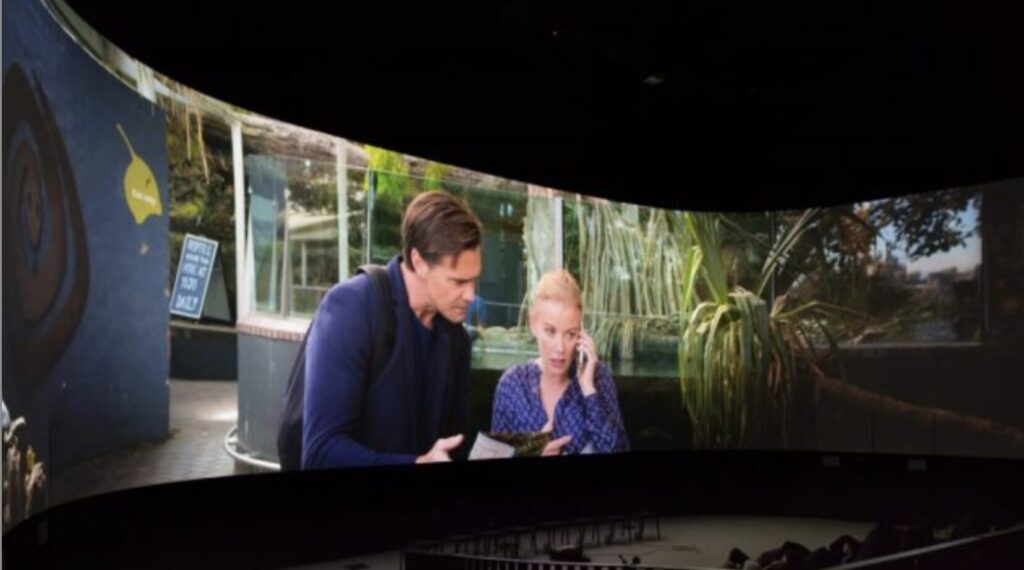
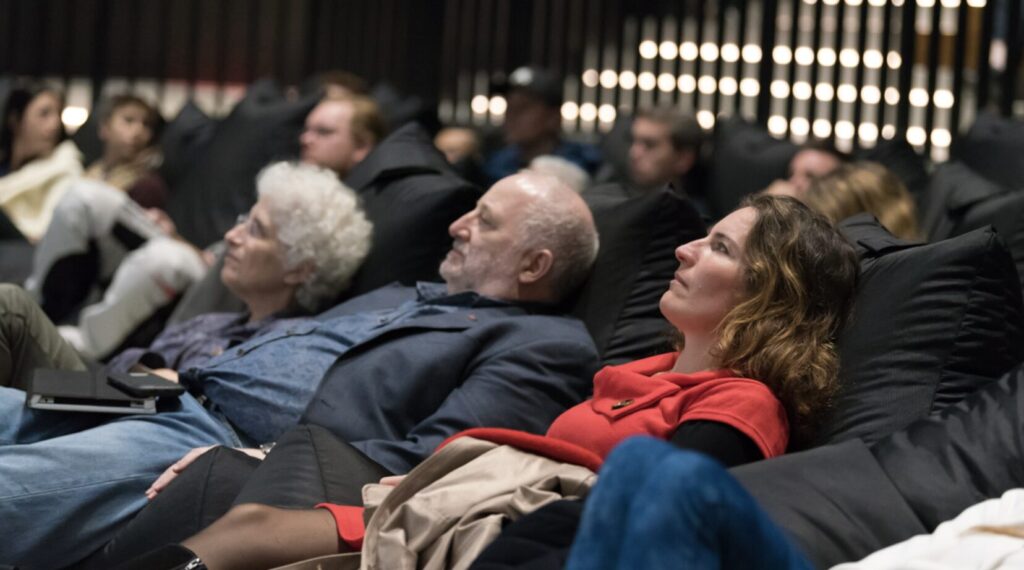
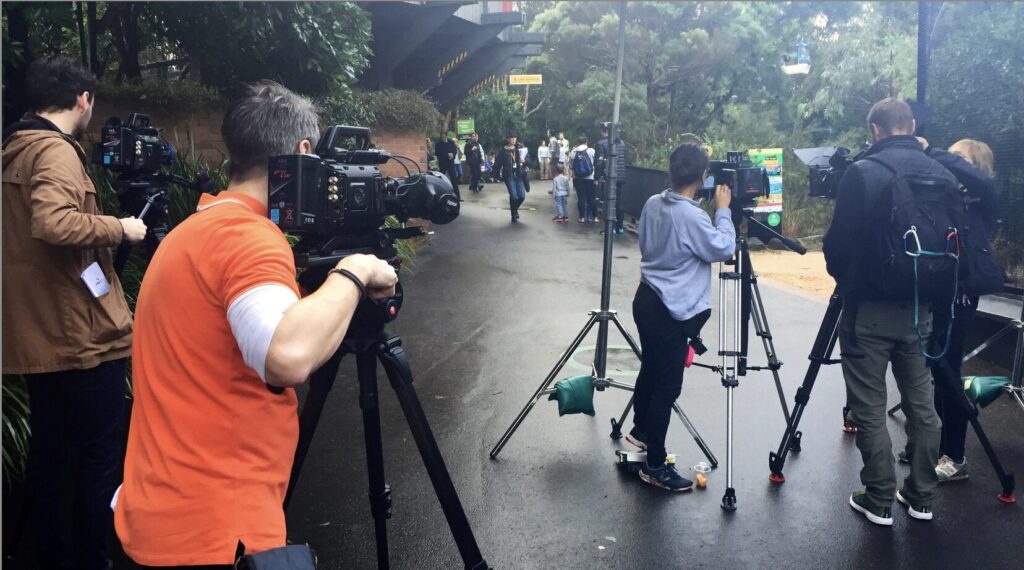
In 2016, Main Course Films was commissioned by the State Government to create a live-action adventure film for a purpose-built immersive cinema inside Sydney’s iconic Taronga Zoo.
The 200 seat theatre features the world’s widest curved cinema screen, 25m across and curving 270° around the audience.
The theatre was still under construction while the film was in production.
Main Course Films needed to create the unique picture and sound formats and delivery specifications before the film could commence production.
With so many world first, Blackmagic Design sent a two-camera Behind-The-Scenes crew to record the entire main unit shoot.
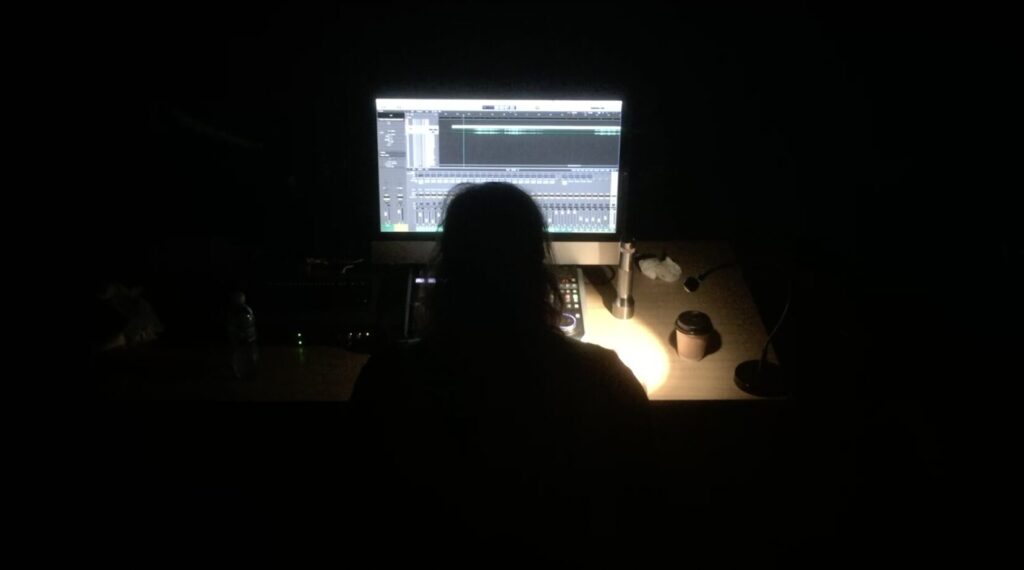
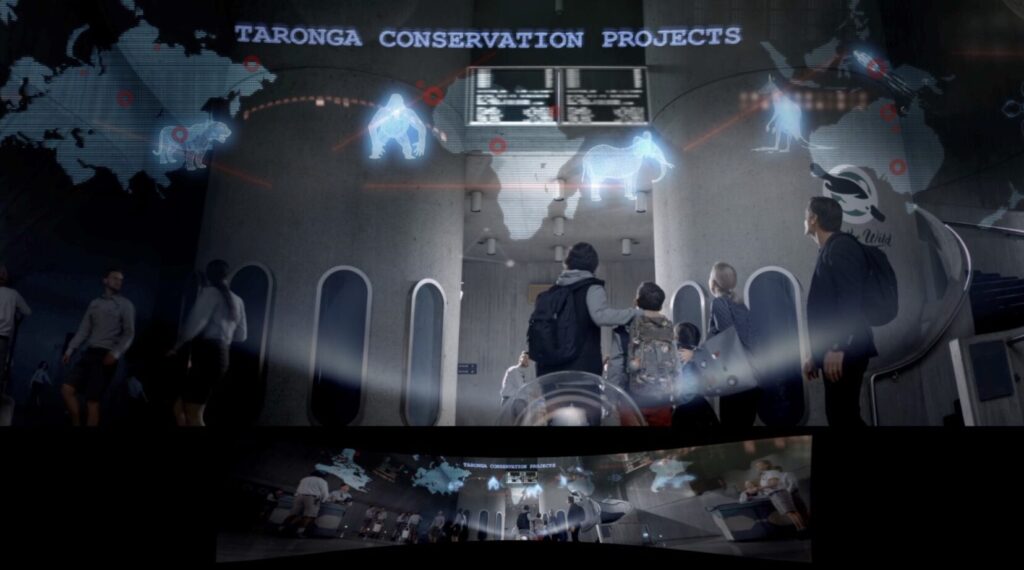
The theatre created a unique immersive experience. The proprietary surround sound format required the final sound mix to be completed in the theatre using a temporary Logic Pro installation. The purpose built Krix surround system allowed sounds to be positioned precisely in relation to the curved screen.
The finished short film has more digital visual effects that the original “Jurassic Park”.
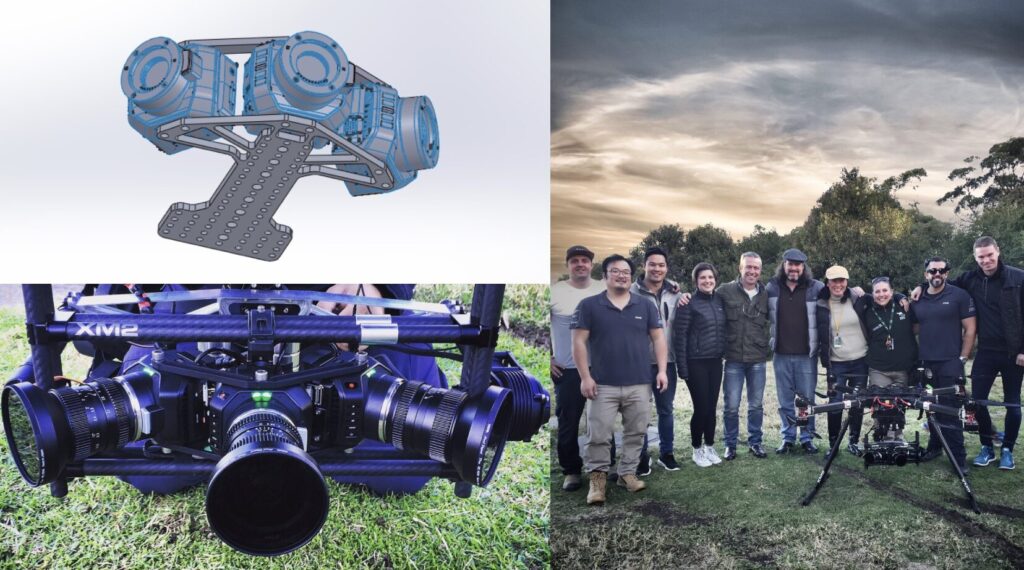
The film sued a world first multi-camera array “The Trident” developed in collaboration between Main Course Films and XM2 Aerial which was flown on a specially modified octocopter. XM2 continued to develop this concept providing aerial services for films such as “Star Wars”, “James Bond” and “Mission Impossible”. These multi-camera arrays are used extensively on large productions.
Goals
• Inspire audiences of all ages to understand real conservation missions at Taronga and around the world.
• Translate Taronga’s mission “We’re for the Wild” into a cinematic, story-driven experience.
• Reinforce Taronga’s leadership in education, sustainability, and storytelling through technology.
• Connect emotional narrative with factual science – proving that environmental action can be entertaining, accessible, and empowering.
Innovation & Craft
• Immersive Cinema Design: Created for Taronga’s purpose-built cinema, with a 180° curved screen and motion environmental effects, predating modern VT and Apple Immersive formats.
• Cinematic-Scale Storytelling: A scripted narrative that fuses live-action adventure, wildlife cinematography, and digital projection.
• Multi-Layered Sound: Designed for multi-channel surround playback, building emotional immersion around audience perspective – a precursor to Apple Spatial Audio workflows.
• Authenticity through Research: Every storyline (turtle rehabilitation, corroboree frog breeding, Sumatran tiger conservation) was drawn directly from Taronga’s active fieldwork and partnerships.
• Audience Interactivity: Integrated with the Taronga App, allowing visitors to continue the Wild Squad experience in augmented learning spaces and games.
Why It Matters
Wild Squad Adventures marked a turning point in educational storytelling – proving that conservation messaging could be cinematic, emotional, and technologically innovative.
It showcased how narrative and emotional action can coexist: an emotional adventure built on real science.
For Taronga, it became more than a film – it was a new way to engage families, inspire children, and connect them to the planet’s most urgent conservation stories.
The film helped reframe Taronga Zoo’s brand identity, leading into the broader “We’re for the Wild” campaign, which has since become synonymous with Taronga’s public mission.
Key immersive takeaways
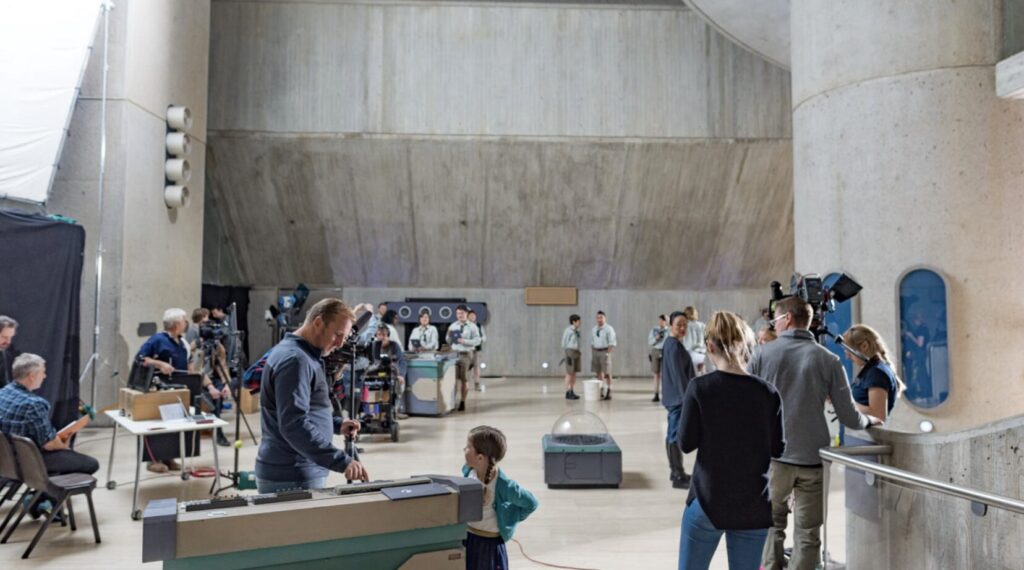
• True immersive content requires exponentially more precision than other formats.
• The extreme of this is narrative drama where most of the established rules and storytelling conventions have been built around a rectangular frame which performs the role of both the proscenium and the anchor around which editing takes place.
• The traditional shots of cinema & TV can still function without a frame around them.
• A close up is still a close up, a wide shot is still a wide shot.
• With careful planning and execution, it is still possible to cut seamlessly between these different shots.
• The need for collaboration is heightened with immersive because the immersive format means that traditionally separate issues can directly impact on each other.
• As always, problems solved in planning are almost always better quality and more cost effective than fix up after the fact, and all the more so in immersive.
• Some standard techniques don’t work as filmmakers use them in conventional formats. For example, a normal backlight effect is only possible in one of three scenarios – (i) back light produced by a practical light in a scene, (ii) back light hidden within the set, (iii) or back light source removed with VFX, but this option will be complicated by unavoidable lens flares in many situations because you can’t use a flag on the lens.
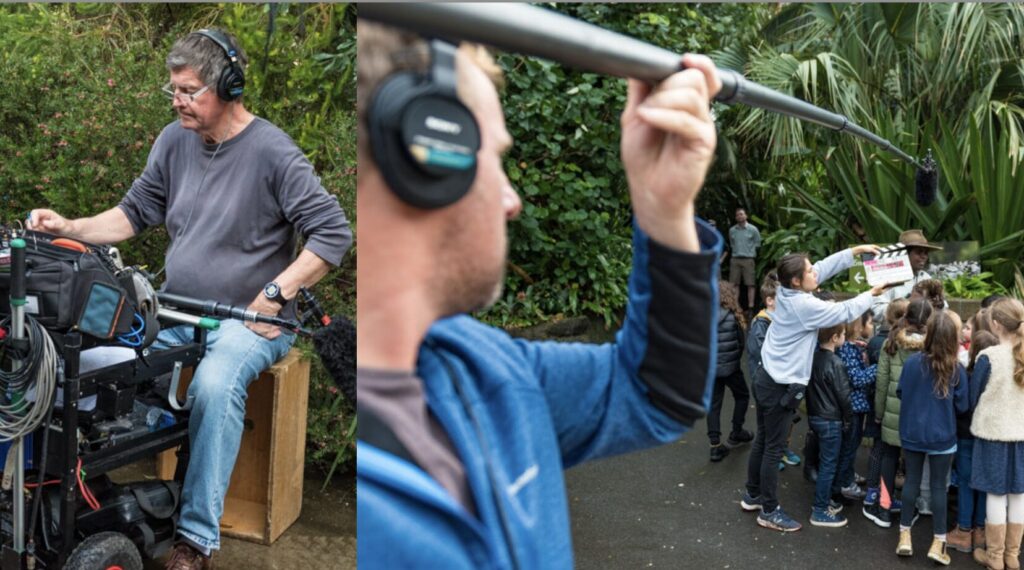
• Using a boom microphone in 180° is impossible unless it’s removed by VFX, which mean immersive projects will be more reliant on radio mics.
• Best practice for both drama as well as documentaries is to use both radio mics and boom mics so that if ever there is a failure of one (eg. radio signal drop out) there is a separate clean signal from the other.
• Without the backup of a boom mic, using radio mic transmitter packs with an on-board 32-bit recorder is the only practical way of ensuring a backup source for critical dialogue.
• The blocking of the performer’s positions becomes more important in contrast to traditional formats where the camera position and framing was more defined by a (usually) rectangular format.
• Immersive means actors will be on screen for significantly longer than on traditional screens, so if the actor falls out of character or flubs a line, it is not possible to cut back and forth away from their performance to the same extent as traditional screens, so rehearsing and blocking each scene is critical to keeping performances solid.
• Without effective coverage in immersive, editing will not be able to deliver the level of finely-tuned performances modern audiences expect from high quality drama, whether it is in the feature format or episodic format.
• Carefully controlling camera movement and editing is essential to maintain a seamless immersive experience and avoid the real, physical impact on the viewer, in what’s referred to as “the barfogenic” zone.
• Filmmakers need to be constantly aware of what is happening front and centre, but also everything that’s happening around the viewer in the immersive hemisphere.
• Human temporal processing varies due to a number of factors, including (i) Light Level – as with analogue and digital cameras, the human visual system can see further into darkness by slowing down its temporal processing, so our perception of motion and movement is different to a candle-lit dinner to what is in a park on a sunny day and (ii) Alertness, fear, heart-rate and adrenaline.
• On top of a shot list, storyboarding masters are critical in understanding the flow of a scene and how to tell your story.
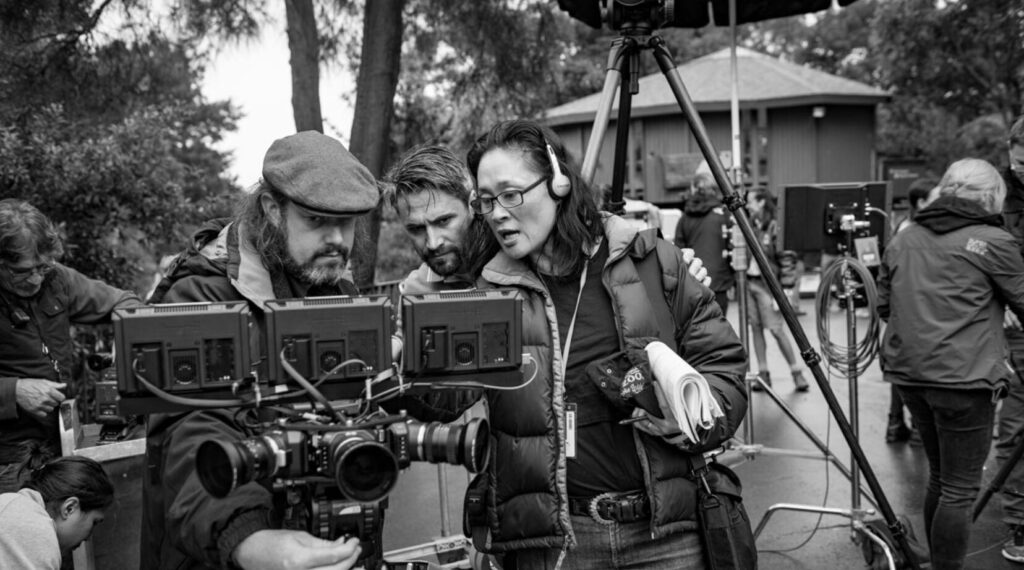
• There are limits to the extent that is practical to simultaneously shoot drama on separate cameras for immersive and conventional formats side by side.
• The front of the lens of the conventional camera cannot enter the 180° field of view of the immersive camera, severely limiting the coverage options.
• There are limits to how precisely cameras can be set to the correct eyeline for immersive and conventional at the same time, meaning one is guaranteed to be incorrect to some degree.
• Both eyelines and horizon lines are critical in immersive formats – – the balance between them will determine how framing for conventional formats within immersive will function.
• IMAX provides the best example of how the basic rules for how a semi-immersive format functions with eyelines and horizon lines.
• The evolution of these rules & conventions for IMAX from the early to mid 2000’s shows how the audience can also be slowly educated and acclimatised to new expectations and limits.
• “Avatar” or “Oppenheimer” would have been completely unthinkable to IMAX experts in the late 1990s.
• It also provides a template for how these rules can be bent or re-invented for different genres and styles.
• Immersive can be thrillingly exciting, but also brings risk associated with human factors such as balance, nausea etc.
• Instability on the Z-axis roll is a very real issue.
• Peripheral vision is processed by the same part of the brain as dreams and memories, separate to our main vision processing.
• Most of the codes and conventions of TV and cinema are based entirely around the effects of image and movement on the central part of human vision and make little allowance for the effects on peripheral vision.
Impact & Recognition
• Premiered as the centrepiece immersive attraction at Taronga Zoo’s purpose-built cinema with a screen measuring 25m x 5m, the widest widescreen cinema in the world.
• Served as a creative and technological bridge between traditional cinema and immersive experiences – influencing later works in immersive storytelling.
Credits
A Main Course Films production
CAST
Scout: Scout Bowman • Chief Agent Gillian: Gillian Markam • Agent Leon: Leon Burchill • Mum: Lauren Clair • Dad: Jeremy Lindsay Taylor • Jacob: Angus Darling & Ronan Darling • Agent Libby: Libby Hall • Agent Michael: Michael McFadden • Scout Double: Sofia Nicholas
CREW
Writer/Director/Editor: Clara Chong • Producer/Cinematographer/Colorist: Ben Allan ACS CSI • Executive Producers: Matt Carroll, Posie Graeme-Evans, Carolien Foley • Production Designer: Sam Wilde • Composer: Carlo Giacco • Costume Designer: Sheridan Tyler • Casting Director: Marianne Jane, Leigh Pickford • Voiceover Written & Performed by: Nardi Simpson
Production Department
Production Manager: Rachael Dore • First Assistant Director: Cameron Watt • Second Assistant Director: Brett Omara • Runner: Thomas Ah Kuoi • Production Accountant: Matthew Bristow • Production Insurance: HW Wood • Director’s Assistant: Meredith Calthorpe
Camera Department
Camera Operator: Matthew Allard ACS • A Camera 1st AC: Goldie Soetiano • B Camera 1st AC – Ella Gibbins • Dailies/Data Wrangler: Meredith Calthorpe • Camera Assistant: Shannon McQuaid
Drone Producer: Stephen Oh • Drone Camera Operator: Quentin Peel • Drone Pilot – Aiden Kelly • 1st Drone Technician: Jin Lee • 2nd Drone Technician/VFX: Rob Stagg
Underwater Cinematographer: Roger Buckingham ACS
Art Department
Art Director: Sam Wilde • Art Department Assistant: Phanida Kovalevsky • Scout & Jacob’s Bedroom Artwork: Stella Darling • Art Department Runner: Holden Hobbs • Set Building: Gorilla Constructions • Additional Storyboards: Ricardo Rosario
Locations
Locations Manager: Luke Torrevillas • Location Coordinator: Dulce Aguilar • Location Assistant: Paul Pinter
Sound
Sound Recordist: Graham Wyse • Boom Operator: Michael Wyse
Lighting/Grip
Gaffer: Steve Schofield • Best Boy: Richard Hawkins • Best Boy: Alan Fraser • Key Grip: Pip “The Grip” Shapiera • Grip Assistant: Joe Bruneteau • Jimmy Jib Tech/Grip Assistant: Conor Deans
Wardrobe/Hair & Makeup
Wardrobe: Rebecca Romans • Hair & Makeup: Tracey De Vries • Additional Hair & Makeup: Belinda Moore
Unit
Unit Safety: Brad Dore • Caterer (Zoo): Compass Group (Australia) Pty Ltd • Caterer (HQ): Sheldon Bailey @ Sheldon’s Catering
Legals
Andrew Dawson
VFX Facility: Frame, Set & Match • VFX Producer: Martin Thorne • VFX Supervisor: Phil Stuart-Jones • Fusion Artist: Graham Davidson
Music Licensing Supervisor: Helena Czajka @ Uncanny Valley • Surround Sound Consultant: Phil Judd • Foley: Michael Tippett
Here With Me (Two Worlds) performed by Susie Sun (ASCAP) Performed by Susie Sue (ASCAP), Written by Robert Koch (ASCAP), Published by Sony Germany (GEMA/ASCAP) & Paramita Publishing (ASCAP), Licensed courtesy of Riptide Music Group LLC
DI Color Grade, Sound Design & Sound Mix by Main Course Films
Unit Photographer: John Slaytor • BTS Video: Søren Phillips • Additional BTS Video: Sanjin Smitran • Addition BTS (Post): Clinton Harn
Drama Coach: Brett Rogers • Casting: Maura Fay Casting • Extras Casting: PG’s Agency • Accessibility Advisor: Trevor Allan • Education Advisor: Angela McLean • Special Advisor: Spencer Allan
SPECIAL THANKS
Richard Clendinnen, Rachel Privett, The Bowmans, Christine Genzberger, Kelly Tanno, Kazuko Minamoto-Cho, Richard Clendinnen, Andrew Blaxland, The Dores, Sara Carroll, The Hansen-Hawkes, The Hendrikx’s, The Bowmans, The Darlings, The Smith-Brauns, The De Boys, Anthony Geernaert, Sheena O’Connell, Rachel Privett, Travis Pavitt, Nicole Kerr, NIDA, Pieter De Vries ACS, David Lewis ACS, Tahlia Dahkal, Stephen Hider, James Esson, Best Fruit Mosman, Mark Bretherton, IMAX Australia, Cameron Glendinning, John Mitchell, Cressida Askew, Ying Li.
ARICHIVAL/LICENSED FOOTAGE
Finale Animal Montage footage courtesy of: Nat Geo WILD, Digital Rights Group, Off the Fence, Nubo Wildlife, Sky Vision, Blue Ant Media, Nature Conservation Films and others
THANKS & ACKNOWLEDGEMENT
Taronga acknowledges NSW Government partners in wildlife conversation: NSW Office of Environment & Heritage.
Taronga would like to thank all staff, family and volunteers who helped in the making of this film.